
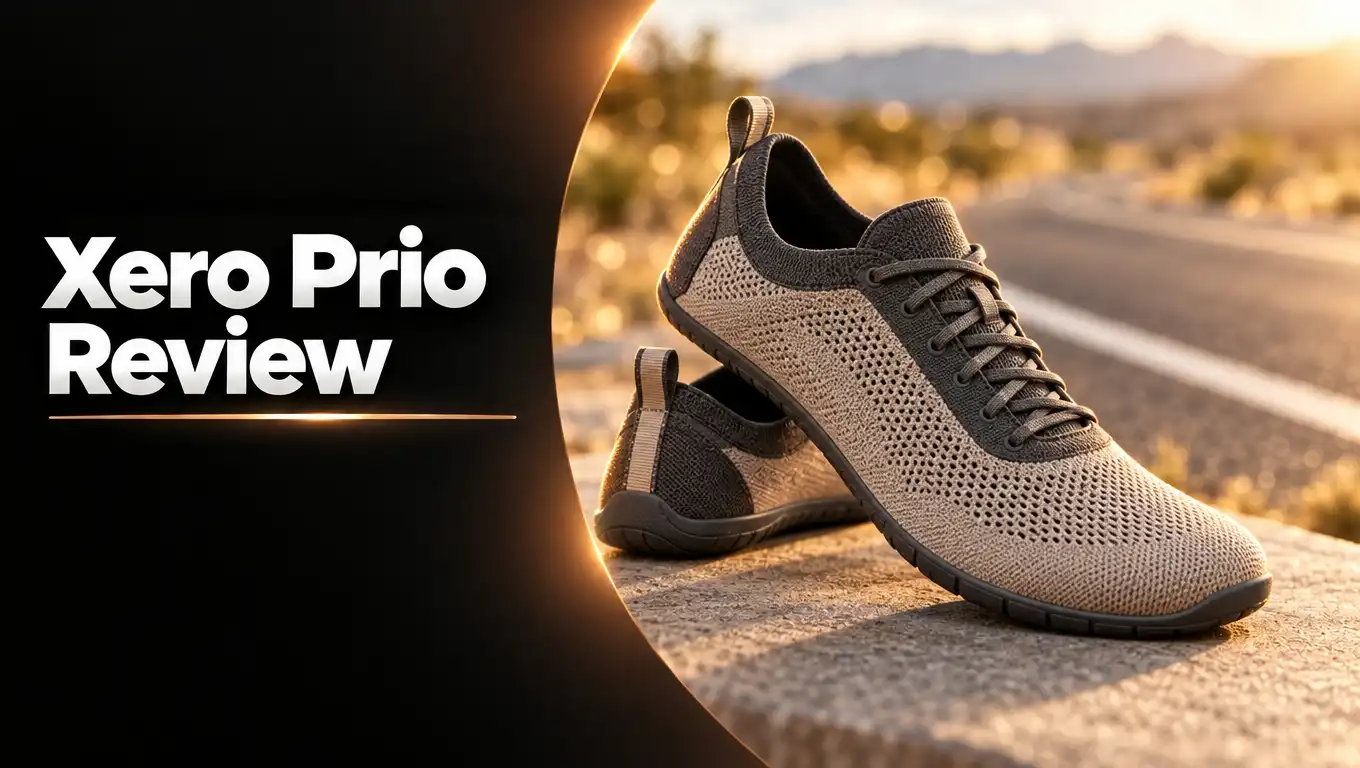
Xero Prio Review 2026: Is It Worth Your Money?
Your feet spend all day inside thick, stiff shoes. The Xero Prio promises a different feel. It offers a flat sole, a roomy toe area, and a price under $100. I looked at lab test data, long term wear reports, and user feedback to see if it delivers. Read on to learn who should buy it and who should skip it.
In a Nutshell
- The Prio is a zero drop barefoot shoe. Lab tests measured a drop of just 0.4 mm. The stack height is about 12 mm, so you feel the ground in every step.
- The sole is very flexible. It bends with only 4.0N of force, while the average running shoe needs about 15.5N. Your foot moves freely and builds strength over time.
- The price is friendly. Most pairs cost around $90, well below the $157 average for running shoes. It is a smart first pair for anyone new to minimalist footwear.
- Breathability and wet grip are the weak spots. The thick upper traps heat in summer. The outsole slips more than most shoes on wet ground.
- The shoe is durable. The toebox and outsole tested well. Xero also backs the sole with a 5,000 mile warranty.
- Transition slowly. Your feet and calves need time to adapt. Start with short walks before you run in them.
What Is the Xero Prio?
The Xero Prio is the brand’s best selling barefoot shoe. Xero calls it a “do almost anything” shoe. You can run, hike, lift weights, or walk to work in it.
The shoe has a zero drop sole. Your heel and forefoot sit at the same height. This position feels natural and keeps your posture upright.
The sole uses Xero’s FeelTrue rubber. It is thin enough to let you feel the ground. It is thick enough to protect you from small stones and rough pavement.
The upper uses mesh with a durable overlay. The materials are vegan friendly. The shoe also has adjustable tension straps that wrap around your midfoot.
Many people start with the Prio because it looks like a normal sneaker. You can wear it around town without strange looks. The wide toe area is the only big clue that it is a barefoot shoe.
Xero sells the Prio for men and women. It comes in several colors. Newer versions include the Prio Neo, the Prio Suede, and the Prio Coast.
Here is the men’s version you can check out on Amazon.

- Natural Movement Design: Barefoot + minimalist principles with a wide toe box for natural splay, zero-drop for...
- Lightweight Performance: Our icon that started it all; multi-purpose athletic shoe
- True to size. Supportive Fit: Breathable mesh upper with moisture-wicking lining
Last update on 2026-11-01 / Affiliate links / Images from Amazon Product Advertising API
Design and Looks
The Prio looks like a clean athletic sneaker. It has a low profile and a flat sole. The shape is simple and not flashy.
Black and white versions look sleek and go with most outfits. All black pairs work well for daily errands. Some brighter colors look a bit odd, so check photos before you buy.
The shoe has reflective straps. They help drivers see you during early morning or evening runs. This small detail adds real safety value.
The Prio also has a finger loop heel tab. Most Xero shoes skip this part. The loop makes the shoe easy to pull on.
The tongue is padded and measures about 6.9 mm. That is thicker than you expect on a minimalist shoe. It adds comfort but also adds some heat.
The tongue has no gusset. It can slide a little to the side. The tension straps help hold it in place.
The shoe is versatile, but not perfect for every event. It fits gym days, walks, and trail paths. You would not wear it to a formal dinner or a business meeting.
Fit and Sizing
The Prio fits true to size. Most buyers order their normal size and feel happy. If you plan to wear thick socks, size up by half.
The toebox gives your toes space to spread. Lab measurements show a toe width of 76.2 mm. The average running shoe measures 73.2 mm.
The toebox is also tall at 33.9 mm. Bulky toes get lots of room. Some people find the front a little floppy.
The midfoot is not very wide. The measurement is 94.1 mm, a bit below average. People with very wide feet may feel a snug middle.
Customer feedback matches this. Some wearers love the roomy toes. Others say the shoe runs narrow.
The tension straps help here. You can tighten or loosen them as your feet swell. This makes the fit more flexible than a basic lace up shoe.
The insole is removable. Take it out and you gain even more room. You also get a closer feel of the ground.
If your feet are very wide, look at the Xero HFS II. It has a more foot shaped design. It is also covered in the alternatives section below.
Comfort and Ground Feel
The Prio is comfortable once your feet adapt. The sole is thin, so you feel every surface. Grass, pavement, and gravel all feel different.
Lab tests found a shock absorption score of only 25 SA. The average running shoe scores 130 SA. This tells you the shoe is nearly barefoot.
The stack height is about 12 mm. A normal running shoe stacks 35 mm or more. Your muscles work harder because the shoe does less for you.
The sole is also very flexible. It bends with just 4.0N of force. Your toes and arches move the way they would without shoes.
One tester wore the shoe for ten months. That included marathon training and the race itself. The tester said the shoe felt light and very comfortable.
Women’s size 7 pairs weigh about 6.4 ounces each. Men’s pairs are heavier at around 9.8 ounces in lab tests. The thick outsole adds that weight.
You can add cushion if you want it. Swap in a thicker insole. The tall toebox leaves room for it.
Ease in slowly. Start with short walks. Add distance over several weeks. This protects your calves and feet.
Top 3 Alternative for Xero Prio
The Prio is a strong pick, but it is not for everyone. These three alternatives fix its weak spots. Each one offers a barefoot feel with a different strength.
Xero Shoes HFS II
The HFS II is lighter and more breathable than the Prio. It has a foot shaped fit and a roomy toebox. It suits road runners and gym fans.

- Natural Movement Design: Barefoot + minimalist principles with a wide toe box for natural splay, zero-drop for...
- Lightweight Performance: Performance road running shoe
- Supportive Fit: Breathable mesh upper with moisture-wicking lining
Last update on 2026-11-01 / Affiliate links / Images from Amazon Product Advertising API
Vivobarefoot Primus Lite III
The Primus Lite III is a premium barefoot trainer. It has a wide fit, a light build, and recycled materials. It costs more but feels refined.
No products found.
Merrell Vapor Glove 6
The Vapor Glove 6 gives a snug, sock like feel. It uses a zero drop sole and a flexible build. It works well for trails and daily wear.

- 100% recycled breathable mesh upper
- Merrell Air Cushion in the heel absorbs shock and adds stability
- 100% recycled laces and webbing
Last update on 2026-11-01 / Affiliate links / Images from Amazon Product Advertising API
Traction and Grip
Grip is a mixed area for the Prio. Dry ground feels fine. Wet ground is where problems show up.
Lab tests gave the outsole a traction score of 0.27. The average score was 0.51. That means the shoe slips more than most.
The outsole has three rubber zones. Deep grooves split these zones for flexibility. A chevron tread pattern covers each zone.
The design looks good on paper. In wet tests, it did not grip well. Smooth tile and wet paint are the worst surfaces.
Real world reports are more positive. One long term tester hiked wet, rocky trails without trouble. The same tester walked on icy sidewalks without sliding.
So results depend on the surface. Dry roads, gym floors, and dirt paths work well. Slick marble and wet metal need extra care.
Take smaller steps on wet days. Keep your feet under your body. Avoid sharp turns on smooth surfaces.
If you run trails in rain often, pick a shoe with deeper lugs. The Merrell Vapor Glove 6 is a good example. The Xero Mesa Trail 2 is another option from the same brand.
Breathability and Weather
Breathability is the Prio’s biggest weakness. The upper has a mesh base with a thick overlay. That overlay blocks most airflow.
Lab tests gave a breathability score of 2 out of 5. The average is 3.6. Light barely passed through the upper under inspection.
Hot weather makes this worse. Your feet will feel warm and sweaty on summer runs. Moisture-wicking socks help a little.
The insole has small perforations. They let some air move under your foot. Removing the insole adds more airflow.
Cold weather is not ideal either. The shoe has no insulation and no water resistance. Your toes will feel the chill on winter days.
The thick upper does help in light wind and cool spring days. It also protects your foot from dust and small debris. Mild weather is where the Prio does best.
If you live in a hot area, look at the HFS II. Lab tests show it has much better airflow. It shares the same barefoot design.
Dry your shoes after each use. Take out the insole and let both parts air out. This keeps odor down.
Durability and Warranty
The Prio holds up well. The toebox scored 4 out of 5 in lab durability tests. That beats the 2.6 average.
The outsole is thick at 6.1 mm. The average shoe has about 3.2 mm. This thickness explains the extra weight and the long life.
Wear tests showed only 1.0 mm of outsole loss. The average is 1.1 mm. So the sole lasts about as long as a normal running shoe.
The heel padding is the weak point. It scored 1 out of 5 in a harsh scraping test. Normal use will not stress it that much.
A long term tester wore the shoe for ten months. The tread smoothed a little. Small holes appeared near the heel, but the shoes kept working.
Xero also offers a 5,000 mile sole warranty. If the sole wears out before that, Xero offers 60% off a replacement. This promise shows the brand trusts its rubber.
Keep your pair clean for a longer life. Wash the upper by hand with mild soap. Let it air dry away from direct heat.
Most buyers should expect a year or more of regular use. Heavy runners may see faster wear.
Xero Prio for Women
Xero makes a women’s Prio with the same core design. It uses a narrower last. The zero drop sole and flexible build stay the same.
The women’s shoe weighs less than the men’s. A size 7 weighs around 6.4 ounces per shoe. That makes it great for travel bags.
Many colors are available. Black and white and all black are popular picks. Some bolder colors also appear each season.
Customer feedback is positive on comfort and looks. Buyers say the shoe looks like a normal sneaker. Many mention better posture and balance.
Fit feedback is mixed. Some women love the roomy toes. Others find the shoe runs narrow in the midfoot.
If you are between sizes, go up by half. This works well with the tension straps. You can then tighten the fit as needed.
The shoe also works for travel. It rolls up and fits into tight bag corners. Do not leave it rolled for long periods. That can strain the materials.
Here is the women’s version on Amazon.
No products found.
Price and Value
The Prio costs about $90 at full price. The average running shoe costs around $157. That makes the Prio a budget friendly choice.
Sales happen often. Some colors drop by 40% or more. Check for deals before you pay full price.
Compare it to other minimalist brands. Vivobarefoot models often cost $130 to $170. Merrell Vapor Glove models cost about $110 to $140.
The Prio Neo costs between $90 and $100. It has a slightly different build. The Prio Coast costs a bit more.
The value is strong for new minimalist fans. You get durable rubber, a flexible sole, and a good warranty. You also get a shoe that looks normal.
Some buyers feel the price is high for a shoe with no cushion. Others feel it is a bargain. Your view will depend on your needs.
Think about cost per wear. If you use the shoe daily for a year, the price is low per day. If you use it twice a month, it may feel costly.
The 5,000 mile warranty also adds value. You get long term protection on the sole. That is rare at this price.
Xero Prio Pros and Cons
Here is a clear look at the good and bad points. Use this list to match the shoe to your needs.
Pros
- Zero drop sole gives a natural stance and better posture.
- Very flexible sole moves with your foot and builds strength.
- Wide toe area gives your toes space to spread.
- Budget friendly price, usually around $90.
- Strong toebox and outsole durability.
- Removable insole lets you change cushion and ground feel.
- Reflective straps add safety in low light.
- Vegan friendly materials.
- 5,000 mile sole warranty.
- Looks like a normal sneaker, so it fits many outfits.
Cons
- Poor breathability in hot weather.
- Below average grip on wet surfaces.
- Heavier than expected for a minimalist shoe in lab tests.
- Midfoot can feel snug for very wide feet.
- No insulation, so cold days feel chilly.
- Heel padding wears faster than other parts.
- Limited cushion for long runs on hard roads.
Final Verdict
The Xero Prio is a strong first barefoot shoe. It has a flat sole, a flexible build, and a fair price. It looks normal and works for many daily tasks.
Buy it if you want to try minimalist footwear. Buy it if you walk, lift, or run short distances. It also suits travelers who want a light shoe that packs small.
Skip it if you live in a hot place. Skip it if you run on wet surfaces often. Skip it if you need heavy cushion for long road runs.
My rating is 8 out of 10. The shoe loses points for breathability and wet grip. It gains points for price, durability, and comfort.
Start slowly if you decide to buy. Wear the shoe for short walks first. Build up your distance over several weeks.
Check the alternatives above before you pay. The HFS II fixes the airflow problem. The Vivobarefoot Primus Lite III adds premium quality. The Merrell Vapor Glove 6 gives a snug, sock like fit.
Your feet will tell you the truth. If they feel strong and free after a few weeks, the Prio works for you. If not, pick another option from the list.
FAQs
Is the Xero Prio good for running?
Yes, it works for short and medium runs. Ease into it first. Long road runs may feel harsh because the shoe has very little cushion.
Does the Xero Prio run true to size?
Yes, most buyers order their normal size. Go up half a size if you wear thick socks. The tension straps help you adjust the fit.
Is the Xero Prio waterproof?
No, it is not waterproof. The mesh upper lets water in. The shoe also dries fairly slowly because the upper is thick.
Can I use the Xero Prio for the gym?
Yes, it is a great gym shoe. The flat sole gives a stable base for lifts. The flexible build helps with agile moves.
How long does the Xero Prio last?
Most pairs last a year or more with regular use. Heavy runners may wear them out sooner. The 5,000 mile sole warranty offers extra protection.
Is the Xero Prio good for wide feet?
The toebox is roomy, but the midfoot is average. Very wide feet may feel a snug middle. The Xero HFS II is a better option for wide feet.
How do I start wearing barefoot shoes?
Start with short walks of 15 to 20 minutes. Add a little time each week. Give your calves and feet time to adapt before you run.

Dan is a passionate fashion enthusiast and experienced product reviewer who combines years of industry knowledge with a keen eye for quality and style. Through Fashion Reviewer Blog, he provides honest, detailed reviews and practical guides to help readers make informed fashion decisions and discover their personal style.