
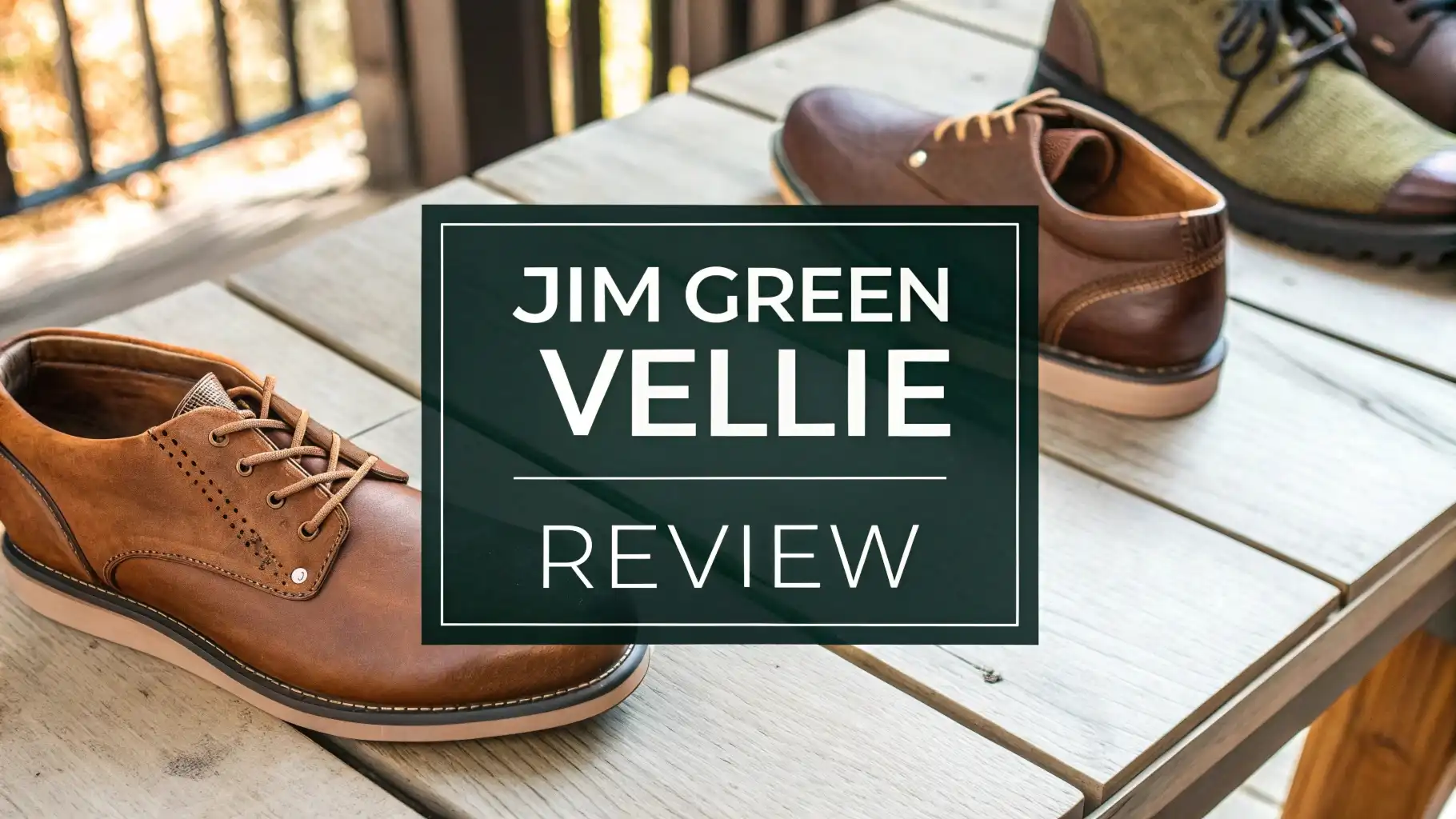
Jim Green Vellie Review 2026: Should You Buy This?
Some boots look good in photos and fall apart in a season. The Jim Green Vellie is not that boot. This is a handmade South African veldskoen that trades flash for thick leather, simple lines and a build you can repair instead of replace.
I spent time reading owner reports, store specs and long term wear notes from people who beat on these boots daily. The picture is clear and a little surprising. A boot at this price should not feel this solid.
If you want a chukka that works with jeans, shorts and a camp shirt, and survives real ground, keep reading. This Jim Green Vellie review covers build, sizing, break in, grip, weather and value. You will also see honest weak points before you spend money.
In a Nutshell
- Built from one thick layer of leather. The upper uses a single layer of 2.2mm full grain leather. Fewer seams means fewer failure points. The vamp and the upper come from one piece, so the boot holds shape as it ages.
- The sole is simple and serviceable. A natural rubber compound sits under a steel shank. The shank adds support and steadiness under the arch. Any decent cobbler can replace the sole when it wears down.
- Price lands in the mid range. Most Vellie styles sit between 124.99 and 149.99 US dollars. The Rough Out Vellie in Khaki runs 139.99 and holds a 4.86 out of 5 rating from buyers on the Jim Green store.
- Sizing needs attention. Jim Green calls the fit true to a Brannock measurement. Many owners still report going down half a size, and a few go up for the toe cap styles. Rough out and nubuck leathers stretch with wear.
- Break in is short and mild. Most wearers report a few days of firmness near the toe crease, then a quick settle. The roomy last helps here.
- Small flaws exist. Some owners dislike the synthetic lasting board and the stock footbed insert. Laces run a little short for some feet. None of these stop the boot from working.
The short version is this. The Vellie is a working shoe dressed as a casual shoe. It is light on the foot, quiet on pavement and tough on gravel. The leather takes scuffs and keeps going. That mix is why owners call it a daily beater and mean it as praise.
What Is the Jim Green Vellie?
The Vellie is Jim Green’s take on the South African veldskoen. That shoe started as field footwear for hot, dry country. Farmers, hunters and travellers wore it because it was light, breathable and easy to repair.
Jim Green builds every Vellie in South Africa. The brand makes the leather, the sole and the stitching in the same country where the design began. That matters to buyers who dislike paying premium money for shoes assembled far from the source.
The shape is a chukka. Three pairs of eyelets, a low ankle, a clean toe. It reads casual without looking sloppy. Wear it with chinos, denim or shorts and it fits the room.
Weight stays low. The Rambler Vellie lists around 1 kg per boot. That is light for leather. You feel the difference on a long walk or a hot day when heavy boots start to drag.
Jim Green also keeps a wide size range and several leather finishes. Smooth full grain, rough out, suede and a heavier Wait a Bit build. The Vellie is one design with many faces, and that range is a large part of why it sells.
How the Vellie Is Built
Construction is the reason to care about this boot. The upper is a single layer of 2.2mm full grain leather. No thin split leather, no bonded layers. The leather is thick, but owners describe it as supple rather than stiff.
The boot uses a one piece vamp and upper. That cuts the number of seams across the flex point. Fewer seams means less rubbing and less chance of a split later. Jim Green also lines the boot with leather, which helps moisture control.
Stitching is double row where the upper meets the midsole. Owners who inspect boots closely point to that detail as a sign of a real working build. The boot is double lasted, so the upper wraps under the footbed for extra support.
A steel shank sits between the insole board and the sole. You get steadiness under the arch without a heavy plate. The outsole is a natural rubber compound, made to Jim Green’s own recipe.
Two honest notes. The lasting board is synthetic, and a few owners say they would pay more for a leather one. The stock insert is basic. Both parts are replaceable, and most buyers swap the insert and forget the rest.
Leather and Colour Options
Colour choice changes the feel of the boot more than you might expect. Rough out leather looks matte and hides scuffs well. Smooth full grain takes a shine and shows creases. Suede feels softest out of the box.
The Rough Out Vellie in Khaki is the most popular finish. Buyers rate it 4.86 out of 5, and photos show it ageing into a soft, dusty tone. Fudge and Bronco Brown run warmer. The Bronco Brown sits on the heavier Wait a Bit build.
The Suede Vellie in Brown is the value pick at 124.99, though Jim Green has marked that style as discontinued. If you want it, buy soon. There is no restock planned.
Rough out and nubuck leathers stretch more than smooth leather. One owner reported his rough out pair loosened past the ideal fit over months of daily wear. Cedar shoe trees helped but did not fully fix it. If you sit between sizes on a rough out pair, take the smaller one.
Jim Green also previewed new leathers and styles for 2026. The core Vellie shape stays the same, so the fit advice here still holds.
Top 3 Alternative for Jim Green Vellie
Not every buyer wants a South African boot, a wide last or a long delivery wait. Some people want a lighter wallet hit or a quick Amazon return window. These three picks cover the main reasons to look elsewhere.
The Clarks Desert Boot is the classic. Crepe sole, soft suede, clean lines. It suits office days and city weekends. It is lighter and softer than the Vellie, and less able to handle rough ground or wet grass.

- Expanding the Clarks Originals family, our Desert Boot arrives in classic black for a timeless look this season and...
Last update on 2026-10-20 / Affiliate links / Images from Amazon Product Advertising API
The Clarks Bushacre 2 is the same family with a rubber sole and a lower price. It grips better than crepe on wet pavement. The leather is thinner and the build is glued rather than stitched, so it will not last as long as the Vellie.
No products found.
The Jim Green African Ranger is the pick for people who want the same brand and a tougher sole. It handles rocky trails and loads better. It is heavier, chunkier and less dressy, so it suits work and trail days more than a dinner out.

- FIT & SIZING; The African Ranger comes with our STC Last, providing a 2E wide fit that offers a roomy and rounded...
- COMFORT; Jim Green’s African Ranger boots for men are engineered with comfort and durability in mind; Our leather...
- BALANCED DESIGN; A balanced construction allows you to confidently wear these boots for any job that needs done: no...
Last update on 2026-10-20 / Affiliate links / Images from Amazon Product Advertising API
How to choose. Buy the Vellie for a light, repairable daily boot. Buy the Desert Boot for style and city comfort. Buy the Bushacre 2 for a low cost entry point. Buy the African Ranger when ground and load matter more than looks.
Jim Green Vellie Sizing and Fit
Sizing is the one part of this boot that causes real frustration. Jim Green states that sizing follows a Brannock device. In practice, owner reports scatter in both directions, so plan for one exchange.
Many owners go half a size down from their sneaker size. Others stay true to size. A smaller group sizes up because the toe cap presses on the big toe. The last is wide and roomy, which helps anyone with broad feet.
One detailed owner post on the Jim Green community spelled out the problem. He measured his foot, emailed support, ignored the advice and ordered up. Then he sized up again to reach a clean fit. His conclusion was blunt. The size chart is a starting point, not a rule.
A few patterns are worth knowing. The regular Vellie runs roomier than the Razorback and the Numzaan on the same foot. Rough out and nubuck leathers stretch more than smooth leather. Wide feet do better in the Vellie than in most chukkas.
The insert is removable, so you can fine tune volume with a thinner or thicker footbed. If you plan to add your own orthotics, Jim Green suggests going a half size up. Order one pair, wear it indoors, and keep the exchange option open.
Break In Time and the First Week
Break in is short. Most owners report a mild, firm feeling around the toe crease for the first few days. After that the leather softens and the boot starts to move with the foot.
One buyer noted his pair never felt like a stiff new boot at all. He credited the generous fit and the soft leather. Another described the toe flex as a little tight at first, then fine once the leather warmed and creased.
The leather lining helps here. It holds the foot without the clammy feel of a synthetic liner. The padded tongue and ankle collar add instant softness, though a few owners say the foam padding is more than they want.
Do this in week one. Wear the boots for two hour blocks indoors, then short walks. Keep the laces a little loose near the top. Let the leather crease where your foot bends, not where the boot wants to bend.
Heel slip shows up in the first week for some buyers. It usually fades as the heel counter molds and the sole softens. If slip stays after two weeks of wear, the boot is likely half a size too long.
All Day Comfort on Your Feet
The Vellie is comfortable in a plain way. No gel pods, no arch gimmicks. A wide toe box, a flat footbed and a light sole do most of the work.
Owners wear these for full shifts, long walks and travel days. One reviewer called his pair the best daily boot he owns. Another walked through desert heat for weeks and reported no blisters after the first days.
The wide toe box is the standout feature. Your toes spread naturally, and that reduces pressure over a long day. People with wide feet and high volume feet rate this boot highly for exactly that reason.
Two comfort caveats. The stock insert is thin, and some owners replace it with a leather or gel footbed for better support. The other is heat. The leather is breathable, but a lined leather boot still runs warmer than mesh.
For most buyers, comfort lands above the price point. It feels like a broken in boot from day three, and it keeps that feel for years rather than months.
Grip and Traction on Different Ground
The outsole is a natural rubber compound made to Jim Green’s own design. It is not a Vibram or a Dainite. That bothers some buyers on principle, and it should not bother you in daily use.
Owners report solid grip on pavement, dry trail, gravel and packed dirt. The tread pattern is simple and shallow, which keeps mud from packing in. The rubber stays quiet on hard floors, a small thing that matters in an office or a shop.
The sole flexes well. That flex is why the boot feels light and why it works on long walks. A stiffer sole would support more under a heavy pack but would feel dead on flat ground.
Where it falls short. Wet rock, slick tile and steep wet grass are not its friends. The tread is not deep enough for loose mud or snow. For that ground, the Razorback or the African Ranger is the better tool.
Treat the Vellie as a town and trail boot. For that job, traction is fine. It has never slipped on me on normal ground, one long term owner wrote, and that sums up the consensus.
Hot Weather, Rain and Dust
This boot was born in dry heat, and it shows. The leather breathes, the lining manages moisture and the light build keeps your feet from cooking. Owners wear Vellies through hot summers in Spain, the southern United States and southern Africa.
Rain is a mixed story. The leather is water resistant rather than waterproof. A short walk in light rain is fine. Standing water will get in through the seams and the tongue gap over time.
Dust and sand are where the Vellie shines. The low ankle and the tight three eyelet lacing keep debris out better than most chukkas. One owner praised the lacing spacing for exactly that reason after desert travel.
The boot also dries fast for a leather shoe. That matters if you walk through wet grass in the morning and need the boots again by evening. Let them air dry away from direct heat, because heat damages the glue around the insole.
Condition the leather before the wet season. A thin coat of leather balm slows water absorption and keeps the rough out from stiffening after it dries.
Care and Cleaning Routine
Care is simple, and simple is the point. Brush off dust with a stiff brush after dirty days. Wipe smooth leather with a damp cloth. Let the boots air dry at room temperature.
Rough out and suede need a suede brush and a little patience. Brush in one direction, let the nap lift, and skip heavy soaps unless the stain is bad. For salt lines, a diluted vinegar wipe followed by a rinse works well.
Condition the leather two to four times a year. Use a natural leather balm and apply a thin layer. Too much product softens the leather past the point of support. Less product, more often, is the safer habit.
One warning from owners. Do not park these boots on a hot boot dryer. One owner reported that heat softened the glue under the insole and caused a squeak. He replaced the insoles with vegetable tanned leather and solved it.
Store the boots with cedar shoe trees if you can. Trees hold the shape and pull moisture out. A 60 dollar pair of trees protects a boot you plan to keep for a decade, and that trade is easy to make.
Durability and Resoling
Durability is the headline. Owners describe the Vellie as a rugged daily beater that keeps looking good after months of hard use. One wilderness guide posted a resole video on a seven year old pair, and the uppers were still sound.
The one piece leather upper carries most of that credit. Thick leather with few seams resists splitting at the flex point. The leather lining adds structure, and the double row stitching holds the upper to the midsole.
The sole wears like rubber should. Expect a few years of daily wear before a resole is needed, more if you rotate pairs. A local cobbler can replace the sole. That keeps a good upper alive instead of sending it to landfill.
Jim Green builds these to be repaired. That is the real value story. A 140 dollar boot that lasts eight years and takes one resole beats three cheap boots that end up in the bin.
The weak spots are the synthetic lasting board and the stock insert. Neither is a durability problem in normal use. They are the parts a picky owner would upgrade, and some do exactly that.
Price and Value in 2026
Prices in 2026 sit in a narrow band. The Suede Vellie in Brown runs 124.99 and is being discontinued. The Rough Out Vellie lists at 139.99. The Rambler Vellie sits near 149.99. The heavier Wait a Bit Vellie in Bronco Brown lists at 224.99 and often sells near 202.49.
Compare that with the Clarks Desert Boot at 140 US dollars and the African Ranger at 194.99. The Vellie lands right at the classic chukka price while offering a thicker leather upper and stitched construction.
Value depends on what you count. If you count style alone, the Vellie is a fair deal. If you count leather thickness, repair ability and years of use, it is one of the better deals in casual leather boots.
Two costs to keep in mind. Shipping and import fees apply outside the United States, so check the total before you order. Returns also take time, and sizing exchanges cost a week or two of waiting.
Watch for sales. Jim Green runs seasonal discounts, and discontinued colours drop hard. A discontinued colourway is often the cheapest way into the same boot, so check the sale section first.
Pros and Cons
Pros
- Thick 2.2mm full grain leather upper with very few seams
- One piece vamp and leather lining for shape and moisture control
- Stitched double row construction that a cobbler can repair
- Steel shank adds support without weight
- Wide, roomy last that suits broad feet
- Light on the foot at around 1 kg per boot
- Short and gentle break in
- Honest price between 124.99 and 149.99 for most styles
- Made in South Africa from local materials
Cons
- Sizing reports conflict, so an exchange is likely
- Rough out and nubuck leathers stretch over time
- Stock footbed insert feels basic and squeaks if heated
- Synthetic lasting board on a boot at this price
- Proprietary sole instead of a name brand rubber
- Shallow tread struggles on wet rock and mud
- Laces run short for some buyers
- Water resistant rather than waterproof
Who Should Buy the Jim Green Vellie?
Buy the Vellie if you want one casual leather boot for most days. It handles office floors, errands, day hikes and travel in one package. It looks tidy with chinos and works with shorts in summer.
Buy it if you have wide feet. The roomy last and wide toe box are the main reason many owners stay loyal. Most chukkas squeeze the toes, and this one does not.
Buy it if you care about repairs. A stitched boot with a replaceable sole is a long term object. You buy once, resole twice, and skip the cycle of cheap replacements.
Skip it if you need a waterproof boot for wet winters or deep mud. Skip it if you want a soft, sneaker like feel from hour one. Skip it if you cannot handle a possible size exchange.
It is not a hiking boot and not a dress boot. It sits between the two, and that middle ground is exactly where most people live. If that sounds like your week, the Vellie earns its place by the door.
Frequently Asked Questions
Does the Jim Green Vellie fit true to size?
Jim Green says the fit follows a Brannock measurement. Many owners still report going down half a size, and some with narrow feet stay true to size. Order your normal size first and keep the exchange option open.
How long does the Jim Green Vellie take to break in?
Most owners report three to seven days of light wear. The leather softens near the toe crease first. The padded collar and tongue feel soft from day one, so the boot never feels harsh.
Is the Jim Green Vellie waterproof?
No. The leather is water resistant and handles light rain. Standing water enters through the seams and the tongue gap. A leather balm helps, but a dedicated waterproof boot is the better choice for wet climates.
Can the Jim Green Vellie be resoled?
Yes. The upper is stitched to the midsole, so a cobbler can replace the sole. Jim Green designed the boot to be repaired rather than thrown away. One wilderness guide resoles pairs that are seven years old.
Is the Jim Green Vellie good for wide feet?
Yes. This is one of its strongest points. The last is roomy and the toe box is wide. Owners with broad feet often report a better fit here than in Clarks or other chukkas at the same price.
Where is the Jim Green Vellie made?
Every Vellie is made in South Africa. Jim Green makes the leather, cuts the parts and builds the boot in the country where the veldskoen design began. That local supply chain keeps quality control tight.

Dan is a passionate fashion enthusiast and experienced product reviewer who combines years of industry knowledge with a keen eye for quality and style. Through Fashion Reviewer Blog, he provides honest, detailed reviews and practical guides to help readers make informed fashion decisions and discover their personal style.