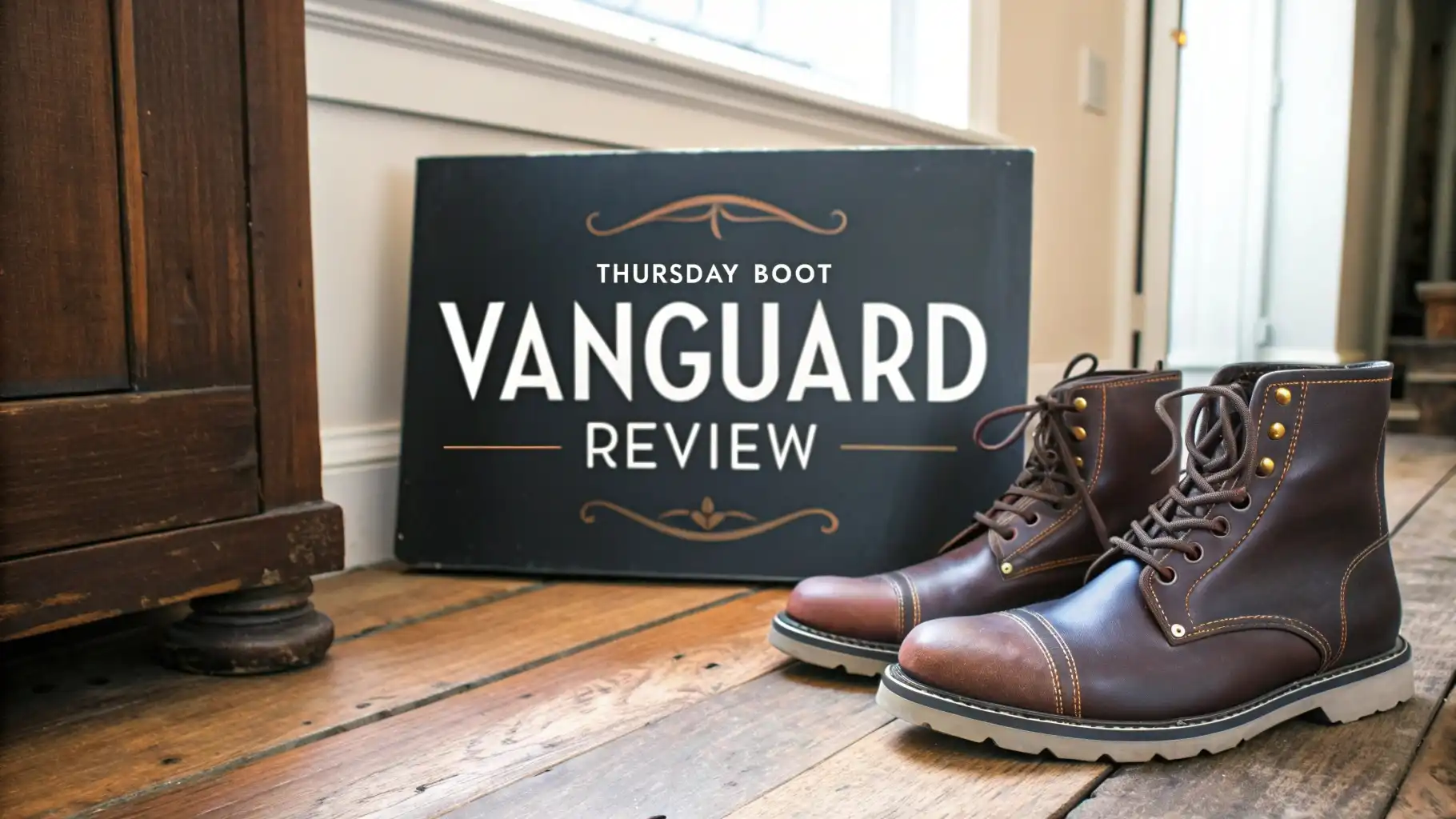
Thursday Boot Vanguard Review 2026: All in One Guide
You want one pair of boots that handles a office Monday and a muddy Saturday. The Thursday Vanguard tries to be exactly that boot. It is the American made model from a brand famous for sharp pricing, and it sits above the Captain in both price and build.
I wore a pair through wet pavement, cold mornings, and long standing shifts. This review covers the leather, the welt, the fit, the heel, and the parts that annoy people. I will also tell you who should skip it.
The Vanguard is not a work boot. It is a dress casual service boot with a taller heel than the rest of the Thursday line. That single detail shapes how it feels on your foot all day.
In a Nutshell
- It is built in the USA. Thursday makes the Vanguard at American factories. The laces, eyelets, and shanks come from US suppliers too, so the whole package stays domestic.
- The leather is the star. Most colors use Horween Chromexcel, which creases deep and ages with real character. The Spice and Burnt Copper versions use a tougher oil tanned hide.
- Goodyear welt construction means you can resole it. A cobbler can rebuild this boot again and again. That single feature spreads the cost across many years.
- The heel runs about one centimeter taller than other Thursday boots. Some wearers love the posture lift. Others feel it in the calf for the first week.
- Sizing is the biggest risk. The last is slim and comes in D width only. Wide footed buyers often need to size up or pick a different model.
- The price lands near $265. That is high for Thursday and low for American made boots. The value story holds up well against Red Wing and Wolverine.
What the Thursday Vanguard Really Is
The Vanguard borrows its shape from the American service boot of the 1940s. Thursday keeps the lines lean and the toe plain. Nothing on this boot looks loud or trendy.
The upper is full grain leather with a full glove leather lining inside. That lining matters. It makes the boot feel soft against your ankle from day one and it adds a second layer of real leather.
Thursday builds the Vanguard in the United States. The brand points out that the laces, shanks, eyelets, and the Poron in the sole all come from American suppliers. That level of domestic sourcing is rare at this price point.
The boot stands about six inches tall. It uses leather laces, metal eyelets, and no speed hooks. The lack of speed hooks is a small thing that becomes a big thing when you put the boots on in a hurry.
You get six leather options in the current lineup. Three are Horween hides and two are Thursday’s own Rugged and Resilient leather.
The silhouette works with denim, chinos, and wool trousers. It does not work with a suit. Treat this as a smart casual boot and you will be happy.
Leather Options and How They Age
Leather decides how a boot looks after two years. Thursday gives you two very different paths here.
The Horween Chromexcel colors cover French Roast, Number 8, and Waxed Cocoa. Chromexcel is partially vegetable tanned and partially chrome tanned, with oil added in the process. The result is a leather that creases into rolling waves instead of sharp cracks.
Chromexcel also takes a shine. You can brush it weekly and keep the boots looking polished. You can also ignore them for a season and let scuffs build. Both endings look good.
The Spice Tan and Burnt Copper versions use the Rugged and Resilient hide. This leather feels drier and thicker in the hand. It shows scratches faster, and it also hides them faster once you rub them out.
Thickness runs around two millimeters on the upper, plus one millimeter of lining. You get three millimeters of leather around your foot. That is the reason the boot feels solid rather than floppy.
The Natural Waxed Roughout option has a fuzzy surface that soaks up marks. Some owners love the worn look. Others find it hard to keep clean in city weather.
Pick smooth Chromexcel for versatility. Pick roughout only if you enjoy visible wear.
Goodyear Welt Construction in Plain English
A welt is the strip of leather that stitches the upper to the sole. Goodyear welting stitches that strip to a rib under the insole. The finished boot is strong and fully rebuildable.
This matters for two reasons. First, water struggles to get past a stitched leather welt. Second, a cobbler can cut the stitches, lift the sole, and attach a fresh one. You keep the upper for a decade or more.
Most boots near $150 use cemented soles. Cemented soles are glued on. When they wear out, the boot usually goes in the bin.
Thursday also adds a cork bed midsole. Cork is a natural material that compresses under your body heat. Over a few weeks it molds to the shape of your foot. That molding is the quiet reason the boot gets comfier with time.
A steel shank runs through the middle of the sole for support. The insole uses Poron, which is an antimicrobial foam that absorbs shock.
The trade off is weight. Welted boots are heavier than glued boots. The Vanguard still feels lighter than a Red Wing Iron Ranger on the foot.
Buy welted once and repair it for years. That is the whole argument.
Sole, Heel, and Grip
The Vanguard uses a studded rubber outsole. The pattern is low and tight, close in spirit to a Dainite sole. It looks dressy and grips well on wet pavement.
The studs sit shallow. Mud and gravel do not pack into them, which keeps the tread working. Snow and ice still need care, because no flat rubber sole is a winter tire.
The outsole wraps a stacked leather heel. That stacked heel is what gives the boot its taller rear and its vintage profile. The heel cap is the first part to wear out.
Expect around two years of hard daily wear before the top lift needs a swap. Replacing that cap is the cheapest job a cobbler does. Get it done early so you never grind into the stacked leather layers.
The sole is not stitched through in a heavy lug pattern, so this is not a hiking boot. Loose dirt and steep grass will test it. City streets, office floors, and light trails will not.
The slim sole keeps the profile clean. It also means the boot feels flexible at the ball of the foot after a short break in. That flexibility helps on long walks.
Balance matters here. You get dress boot looks with work boot grip, not the other way around.
Top 3 Alternative for Thursday Vanguard

- THE PERFECT FIT - We recommend ordering the size you typically wear in leather boots or dress shoes, or ½ size...
- THE CAPTAIN ANKLE BOOT - Complement any outfit from jeans to a business suit in this versatile minimalist boot that...
- UNPARALLELED WORKMANSHIP - Genuine leather boots carefully crafted from hand-selected materials so you can go the...
Last update on 2026-10-20 / Affiliate links / Images from Amazon Product Advertising API
The first alternative is the Thursday Captain. It shares the brand, the welt, and most of the leather options. The Captain runs wider than the Vanguard and comes in more colors. If the Vanguard last pinches your arch, the Captain fixes that.

- Iconic Heritage Design: Men’s leather boots with the unmistakable Iron Ranger look, featuring a classic cap toe...
- Premium Full Grain Leather: Oiled full grain leather upper delivers rich character, rugged durability, and a...
- Built for Lasting Wear: Goodyear leather welt construction and resoleable design make these heritage boots a...
Last update on 2026-09-13 / Affiliate links / Images from Amazon Product Advertising API
The second pick is the Red Wing Heritage Iron Ranger. It uses a thicker leather, a cork sole, and a moc style toe cap. It costs more and weighs more. It also takes a harder break in and lasts longer in rough use. Buyers who work outdoors lean this way.

- Step out and stay dry in the Wolverine 1000 Mile Legacy Cort boots. Sealed to be waterproof with cement...
- Round toe silhouette.

Last update on 2026-10-20 / Affiliate links / Images from Amazon Product Advertising API
The third option is the Wolverine 1000 Mile line. These boots carry a classic American shape and a soft, oiled leather. They feel lighter than the Iron Ranger and dressier than the Vanguard. The trade off is less structure around the ankle.
All three give you a rebuildable sole. All three cost more than a cemented boot. Compare them on fit first and price second.
Try one brand, learn your size, then branch out. Boot lasts differ, so a 9 in one brand is not a 9 in another.
Fit and Sizing Advice
Thursday tells buyers to order a half size smaller than their sneaker size. That rule works well for the Captain. The Vanguard is a different story.
The Vanguard sits on a slimmer last. Owners report it fits tighter through the arch and the instep than other Thursday boots. Some reviewers went true to size and were glad they did.
My advice is simple. If your feet run narrow to medium, take your normal boot size. If your sneakers feel snug across the top of the foot, take a half size up from the Thursday chart.
Width is the hard limit. The Vanguard comes in D width only. There is no wide option. If you wear an E or EE, look at the Captain instead and skip this boot.
The lack of a tongue gusset is another fit note. The tongue can slide to one side as you walk. Lace the boot firmly at the top two eyelets to hold it in place.
Thin socks feel best in this boot. Thick wool socks will crowd the toe box on a snug fit.
Check the return window before you wear them outside. Thursday offers free returns and exchanges in the contiguous United States, so a wrong size costs you time, not money.
Break In and the First Week
Reports on break in are split, and both sides are right. The Horween versions soften fast. The Rugged and Resilient versions take longer.
Chromexcel arrives slightly stiff because the hide is thick, but it warms and folds within a few miles of walking. Most owners call it a mild break in, not a battle.
The Burnt Copper and Spice hides need more patience. Some wearers report thirty to fifty miles before the leather really gives. That is weeks of normal wear, not days.
The taller heel adds its own adjustment. Your calf and Achilles work at a new angle. On day one that feels odd. By day ten it feels normal, and some owners say their posture improves.
Wear thick socks for the first three wears. This stretches the leather slightly and prevents blisters on your heel.
Do not soak the boots. Do not bake them. Walk in them, brush them, and let them rest between wears.
If a spot rubs, apply a little leather conditioner to the inside and wear the boots for short stretches. Most hot spots fade in a week.
Skip the break in entirely and you will blame the boot. Give it ten days and it will feel like yours.
All Day Comfort and Support
The cork bed does the heavy lifting here. After a couple of weeks it holds the shape of your arch. That is the point where standing for a full shift stops hurting.
The Poron insole adds a soft layer under the heel. It is antimicrobial, so the boot stays fresher than an unlined pair. It is also not removable, which limits how much you can customize the fit.
The leather lining is the other comfort win. It breathes better than a synthetic liner and it softens against the ankle. Blisters are rare once the boot is broken in.
Support comes from the steel shank and the firm heel counter. Your foot does not roll inward on uneven ground. That firmness is why some owners call this a walking boot and others call it a standing boot.
Long days on concrete feel fine. Long days on steep hills will remind you about the heel height.
The boot is not insulated. In deep winter you will want wool socks. In summer it runs warm because of the full leather lining.
Weight sits in the middle for a welted boot. It is not a featherweight sneaker and it is not a logger.
Comfort lands around a seven out of ten on day one and a nine after a month. That curve is normal for Goodyear welted footwear.
Style and Outfit Pairings
The Vanguard works best with a slim profile. Think dark denim, a plain tee, and a chore jacket. The lean shape keeps the look sharp.
Raw denim pairs well with the Spice Tan and Burnt Copper versions. The rough leather matches the texture of heavy cotton.
Chinos and a button down shirt work with French Roast and Number 8. Chromexcel holds a shine, so the boot reads dressier in those colors.
Wool trousers work if the hem breaks cleanly over the shaft. A wide leg will swallow the boot and hide its shape.
Avoid suits and avoid gym wear. This boot sits between the two and looks odd at either extreme.
Cuff the jeans or hem them short. Showing the full boot profile is the whole point of the taller heel.
The leather laces add a rugged note. You can swap them for flat waxed cotton laces if you want a cleaner look. That single change shifts the boot toward business casual.
Color matching is easy. Brown leather works with navy, grey, olive, and black denim. The Number 8 color leans burgundy, so pair it with earth tones.
Keep the rest of the outfit simple. The boot should be the detail, not the costume.
Rain, Snow, and Long Term Care
Goodyear welting gives you decent water resistance. Rain rolls off the stitched seam far better than it rolls off a glued sole. That does not make the Vanguard a waterproof boot.
Water still enters through the tongue and the lace gap. Skip deep puddles and long downpours.
Snow brings salt, and salt is the real enemy. Road salt dries leather and leaves white rings. Wipe the boots with a damp cloth after every winter walk and let them air dry away from heat.
Clean with a horsehair brush after each wear. That single habit removes grit before it works into the creases.
Condition every two to three months in normal use. Chromexcel drinks oil, so a light coat keeps it supple and darkens it slightly. Rugged and Resilient leather needs less.
Use shoe trees. Cedar trees pull moisture out and hold the shape of the toe. Cheap trees beat no trees.
Store the boots away from radiators and sunny windows. Heat cracks leather faster than rain does.
When the sole wears thin, take the boots to a cobbler for a resole. A good shop will rebuild the welt and the sole for a fraction of a new pair.
Care turns a two year boot into a ten year boot. The math is that simple.
Vanguard vs Thursday Captain
These two boots share a brand and a build method. The differences sit in the last, the heel, and the leather lineup.
The Captain runs wider through the middle and comes in more colors. It also comes in wide sizes for some builds. Buyers with flat or wide feet usually land on the Captain.
The Vanguard runs slimmer and taller at the heel. It looks more like a vintage service boot and less like a modern fashion boot. The leather options lean toward premium Horween hides.
The Captain costs less. The Vanguard sits roughly $70 higher and lands near $265. That gap buys American assembly and better leather on most colorways.
Break in favors the Vanguard on the Horween versions. The Captain tends to feel softer out of the box because of its leather and lining choices.
Both boots take a resole. Both use a cork midsole and a Poron insole. Both run about six inches tall.
Style is the real tiebreaker. The Captain reads clean and modern. The Vanguard reads vintage and lean.
Pick the Vanguard for looks and leather. Pick the Captain for width options and a lower price. Neither choice is a mistake.
Price, Value, and Where to Buy
The Vanguard lists around $265. Prices move, so check the current figure before you buy.
Compare that to the field. Red Wing Iron Ranger runs near $350. Wolverine 1000 Mile boots sit in a similar range. Tricker’s and Viberg cost two to three times more.
At $265 you get American assembly, Horween leather, and a rebuildable sole. That combination is hard to beat.
Thursday does not run sales. The brand keeps one price all year, which removes the waiting game. You also avoid the fake discount cycle that other brands use.
Shipping is free in the contiguous United States. Returns and exchanges are free within thirty days on unworn boots. That policy lowers the risk of a sizing mistake.
One buying note. The Vanguard sells mainly through Thursday’s own site, and Amazon carries the Captain line more widely. If you want fast Prime shipping, the Captain is the easier order.
Value also depends on how often you wear them. A $265 boot worn four days a week for five years costs about $1.30 per wear. Few purchases beat that math.
Buy once, resole twice, and skip the fast fashion cycle. That is the real value pitch here.
Pros and Cons
Pros
- American made with domestic laces, eyelets, and shanks
- Premium Horween Chromexcel leather on most colorways
- Goodyear welt construction allows full resoles
- Cork midsole molds to your foot over time
- Slim, vintage service boot profile that pairs with denim
- Mild break in on the smooth leather versions
- Free shipping, returns, and exchanges in the United States
- Full leather lining feels soft and breathes well
Cons
- D width only, with no wide option
- Slim last pinches some buyers at the arch
- Heel runs about one centimeter taller than other Thursday boots
- No tongue gusset, so the tongue slides sideways
- No speed hooks, which slows the on and off
- Costs more than the Captain and most Thursday models
- Rubber studded sole is not built for snow or heavy mud
- Leather laces fray if you pull them tight every day
Frequently Asked Questions
Is the Thursday Vanguard true to size?
Not always. Thursday suggests a half size down from sneakers, but the Vanguard last runs slim. Narrow and medium feet often do best at their normal boot size. Try the boots indoors first and use the free exchange policy if the fit feels tight.
How long is the break in period?
It depends on the leather. The Horween Chromexcel versions soften within a few miles of walking. The Rugged and Resilient hides can take thirty to fifty miles before they fully give. Wear thick socks for the first three wears to speed things up.
Is the Vanguard made in the USA?
Yes. Thursday builds the Vanguard at American factories and sources the laces, eyelets, shanks, and Poron from US suppliers. That domestic content is unusual at this price.
Can the Vanguard be resoled?
Yes. Goodyear welt construction lets a cobbler cut the old sole away and stitch on a new one. Watch the heel cap and replace it early, since it wears out before the rest of the sole.
Is the Vanguard good for wide feet?
Probably not. It comes in D width only. Buyers who wear an E or EE should look at the Thursday Captain instead, which offers more room through the middle of the foot.
Is the Vanguard worth the money?
Yes, for the right buyer. You get American assembly, Horween leather, and a rebuildable sole for around $265. Skip it if you need a wide fit, a winter boot, or a true work boot.

Dan is a passionate fashion enthusiast and experienced product reviewer who combines years of industry knowledge with a keen eye for quality and style. Through Fashion Reviewer Blog, he provides honest, detailed reviews and practical guides to help readers make informed fashion decisions and discover their personal style.