Oak Street Bootmakers Trench Boot Review 2026: Ultimate Guide
Looking for a boot that feels good on day one and looks better each year? The Oak Street Bootmakers Trench Boot has a loyal fan base for good reasons. I checked specs, owner feedback, and long term reviews to build this guide. Read on to see if this Chicago boot deserves your money in 2026.
In a Nutshell:
- Made in the USA: Oak Street builds the Trench Boot in the USA with Goodyear welt construction. Cobblers can resole it again and again, so one pair can last many years.
- Horween Chromexcel leather: The natural version starts pale and turns a rich caramel over time. The leather is tough, soft, and easy to care for.
- Roomy toe box: The Elston last gives your toes extra space. Many owners say the boot feels comfortable straight out of the box.
- Hand lasted build: Craftspeople shape each boot by hand and let it rest on the last for at least a week. This step helps the fit stay consistent.
- Price in 2026: Expect to pay about $462 for the leather sole version and $488 for the Dainite version. Sales often drop these prices by a lot.
- Small downsides: The boot has no speed hooks and no wide sizes. The size range also stops before the biggest feet.
What Is the Oak Street Bootmakers Trench Boot?
The Trench Boot is the best known model from Oak Street Bootmakers. The brand started in Chicago in 2009. It focuses on classic American boot styles at fair prices.
The design comes from the World War 1 M1917 Army service boot. Oak Street keeps the shape simple. You get a plain toe, a clean shaft, and no flashy details.
Oak Street builds the boot on the Elston last. The brand created this last for its Everyday Boots line. It aims to fit most foot types and gives the toes plenty of room.
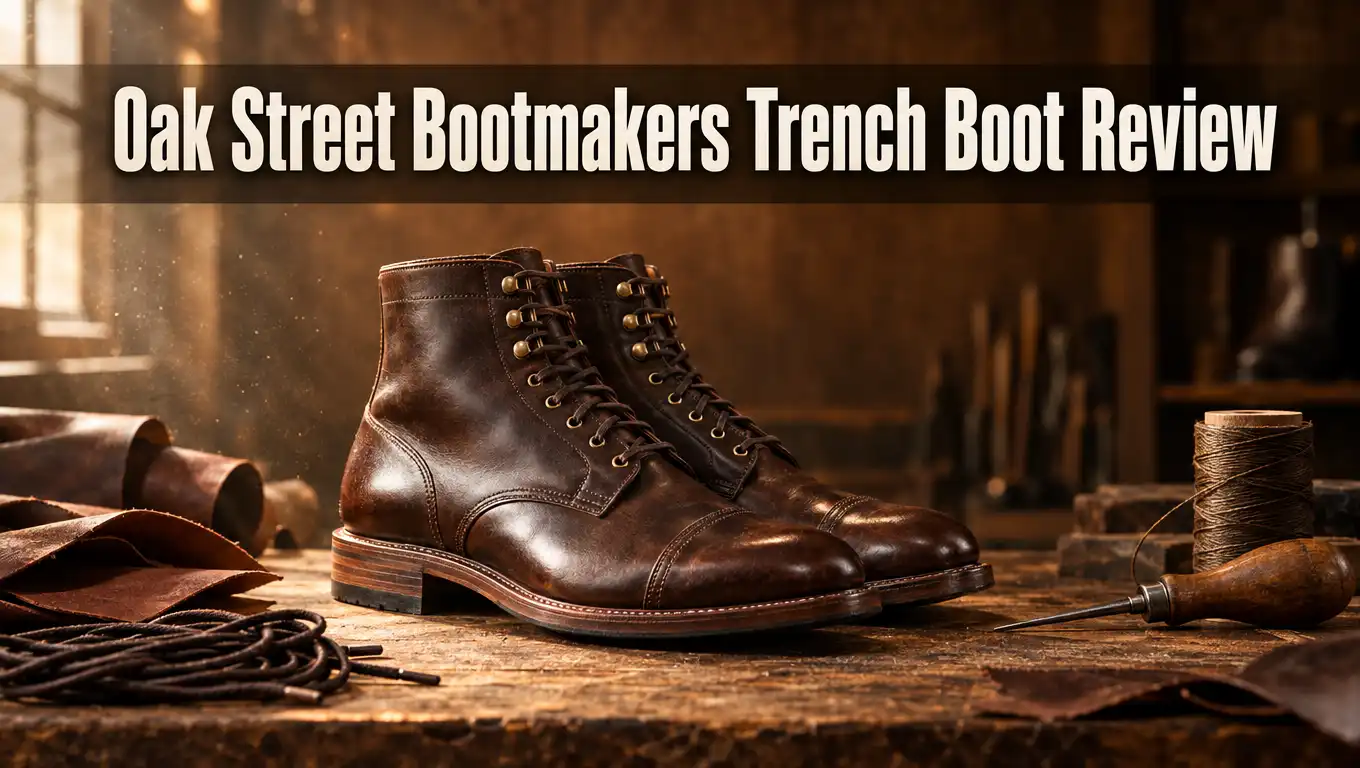
The boot uses Goodyear welt construction. This method makes the boot easy to resole and helps keep water out. You also get a calfskin vamp lining, antique brass eyelets, and rawhide laces.
Oak Street makes the boot in the USA with domestic and imported materials. That detail matters to many buyers. Few brands at this price still build boots in the United States.
You can pick from several leathers and soles. Natural Chromexcel is the fan favorite. Black Chromexcel, roughout, and limited editions appear through the year.
Design and Style of the Trench Boot
The Trench Boot looks simple on purpose. It has a partially structured plain toe and a rounded shape. Nothing about it feels loud.
That plain look makes the boot easy to style. You can wear it with raw denim, chinos, or wool pants. It also looks good with a heavy jacket in cold months.
The toe shape sits in the middle. It is not as sharp as a dress boot. It is also not as bulky as a work boot.
Natural Chromexcel gives the boot a warm and casual feel. Black Chromexcel looks a bit sharper. Pick black if you want a boot that works in a smart casual office.
The boot has no speed hooks. It uses eyelets for the whole lace path. Some buyers miss the speed hooks because they make lacing faster.
Eyelets do hold the laces more securely. They also give the boot a cleaner military look. Either way, you can lace the boot tight and keep your foot locked in.
The shaft stands a little taller than many rival boots. It covers the ankle well. Pant legs sit neatly over the top, so the boot also works under dressier trousers.
Horween Chromexcel Leather Quality
Oak Street uses Horween Chromexcel on most Trench Boots. Horween is a tannery in Chicago that has made leather for over a century. Many top boot brands use this leather.
Chromexcel is a combination tanned leather with a hand rubbed finish. It feels soft yet strong. It also holds oils well, which gives it a light water resistance.
The natural color shows the leather in its undyed state. New boots look pale and close to skin tone. Wear and sunlight slowly deepen the color.
After a year or two, the leather turns a deep caramel brown. Every pair ages in its own way. Scuffs and creases add to the story.
Some reviewers report heavy grain break on Chromexcel. Grain break means deep wrinkles in the leather surface. This trait is common with soft oily leathers and comes with the look.
Black Chromexcel hides scuffs better. It also needs less attention to look neat. Roughout versions flip the leather so the fuzzy side faces out.
Oak Street also releases limited runs in rare leathers. Past drops included leathers from Italy and Wisconsin. Watch the site if you like unusual colors.
Construction and Hand Lasting
Construction is where Oak Street stands apart. The company hand lasts every boot. Hand lasting means a worker pulls the leather over the last by hand.
Most factories use machines for this step. A machine stretches the leather in a uniform way. A person can feel how each part of the hide reacts.
Oak Street says this gives a more consistent fit from pair to pair. The company also lets the uppers rest on the last for at least a week. Many brands skip this and use heat to speed things up.
The boot has a true Goodyear welt. A strip of leather links the upper, the insole, and the outsole. Cobblers can replace the sole without harming the upper.
The brand uses a Barbour welt on this model. This welt style adds a bit of weather protection. Oak Street also uses steel shanks for arch support.
The company changed the build over the years. It removed a slippery leather sock liner that let feet slide forward. It also adjusted the last to hold the foot better.
Not every part is premium. The heel and toe counters use celastic, not leather. Some boot fans want leather counters at this price.
Even so, the build quality is high for the money. The stitching looks clean and even. Owners report few defects.
Top 3 Alternative for Oak Street Bootmakers Trench Boot
The Trench Boot is not the only good choice. Some buyers want speed hooks or a lower price. Here are three strong options you can find on Amazon.
Red Wing Heritage Iron Ranger
The Iron Ranger is a famous American boot. It has a cap toe, speed hooks, and a Vibram mini lug sole. The look is more rugged than the Trench Boot.
Red Wing does not hand last its boots. The toe box is also tighter. Still, the Iron Ranger offers a classic style and strong build.

- Iconic Heritage Design: Men’s leather boots with the unmistakable Iron Ranger look, featuring a classic cap toe...
- Premium Full Grain Leather: Oiled full grain leather upper delivers rich character, rugged durability, and a...
- Built for Lasting Wear: Goodyear leather welt construction and resoleable design make these heritage boots a...
Last update on 2026-10-23 / Affiliate links / Images from Amazon Product Advertising API
Thursday Boot Company Captain
The Captain is a sleek cap toe boot. Thursday sells it at a lower price than Oak Street. It suits buyers who want a dressier shape.
The boot has a slimmer profile and a narrower toe. It lacks the hand lasted build. It works well as a first quality boot on a budget.
No products found.
Wolverine 1000 Mile Boot
The 1000 Mile Boot is an old American work boot. It uses a Goodyear welt and strong leather. The look is polished and a bit dressier.
Wolverine designs the boot in Michigan. It suits you if you want a classic brand with long history. The fit is slimmer than the Oak Street boot.

- Handcrafted in the USA upper made from premium leather from Horween leather Company classic leather outsole with a...
- Designed in Rockford, Michigan and handcrafted in the USA
- Recreated from the first Wolverine 1000 mile boot introduced in 1914 time-tested Goodyear Welt construction is...
Last update on 2026-10-25 / Affiliate links / Images from Amazon Product Advertising API
Sizing and Fit
Oak Street tells buyers to order true to size. Most boot brands ask you to size down. This brand does the opposite.
Many owners wear half a size larger in Oak Street than in other boots. For example, an 11 in Red Wing may become an 11.5 here. Check the size guide before you order.
A new pair feels slightly snug. The leather stretches and shapes to your foot with regular wear. Give it a few weeks.
The toe box has about one extra millimeter of depth. That small change helps your pinky toe breathe. Your feet swell during the day, and the room helps late in the day.
The heel feels fairly snug. This helps stop heel slip. Pair the boot with medium weight socks for the best feel.
The boot has limits. Oak Street does not make dedicated wide sizes. The size range also stops before the biggest sizes.
Wide footed buyers often do well with true to size. An E width foot should fit fine. Some EE buyers go up half a size.
You can try the boot at a store before buying if one is near you. The brand also offers exchanges on unworn pairs. Always check the current return policy.
Comfort and Break In
Many reviewers praise the boot for comfort out of the box. Some say it fits better than boots that cost twice as much. The roomy toe box gets most of the credit.
Break in still takes some time. The leather is thick and a bit stiff at first. Expect a few days of light wear.
Start with short walks around the house. Then wear the boots for a half day. Increase the time as the leather softens.
A few owners say the boot runs snug at first. They felt pressure around the sides. This eased after a few weeks.
The footbed is flat and firm. It has no soft foam pad. Add an insole if you want more cushion.
The Dainite sole feels solid. It gives steady grip on wet pavement. It also lasts a long time.
The leather sole with a Vibram toplift feels sleeker. It looks dressier and bends more easily. It gives less grip in rain.
The boot is not light. It weighs about as much as other service boots. Most owners say the weight feels fine after a few weeks.
You can walk all day in this boot after break in. City commutes feel easy. Long hikes need a sturdier outdoor boot.
Durability, Weather Resistance, and Care
The Trench Boot is built to last for years. Goodyear welt construction lets a cobbler replace the sole many times. Oak Street also offers resole service for its boots.
One owner reported six years of wear with very little care. The boots still looked great and held up well. That story matches many other reviews.
Chromexcel resists water well. The oils in the leather push water off the surface. Heavy rain still needs care.
The Dainite sole handles wet streets well. It struggles on ice. Choose another boot if you walk on icy paths often.
Care is simple. Brush off dirt after wear. Apply a good cream every three to six months.
Neutral shoe cream works well on natural leather. Use it in thin layers. Let it dry before you buff.
Skip heavy oils and wax on natural Chromexcel. They darken the leather fast. Some buyers like that look, but the change is permanent.
Use cedar shoe trees when you store the boots. They absorb moisture and keep the shape. Rotate your boots if you wear them daily.
Roughout versions need even less care. Brush them with a stiff brush. Use a light spray if you want extra protection.
Price and Value in 2026
The regular price of the Trench Boot is $462 for the leather sole version and $488 for the Dainite version. Cap toe versions cost more. Limited editions can cost more still.
Oak Street runs sales through the year. Holiday sales and seasonal events cut prices by about 25 percent. At those prices, the boot costs about $350 to $370.
Is it worth it? I think yes. You get hand lasting, Horween leather, and USA construction. Few brands match that for the price.
The brand has kept prices steady. The Trench Boot rose only about 5 percent over ten years. Many other brands raised prices much more.
Red Wing boots cost less in many cases. They do not use hand lasting. They also have a bulkier toe.
Grant Stone boots cost about the same as Oak Street now. They offer more widths and more leathers. They are made in China.
Thursday boots cost far less. They use thinner leather. They suit buyers on a tight budget.
Think about cost per year. A pair that lasts ten years with resoles costs little per wear. Cheap boots often need replacing sooner.
Pros and Cons
Here is a quick summary of what owners like and dislike. Use it to weigh the boot against your needs.
Pros:
- Made in the USA with Horween Chromexcel leather.
- Hand lasted for a consistent fit.
- Roomy toe box that feels good all day.
- Goodyear welt makes resoling easy.
- Clean and simple design that works with many outfits.
- Prices have stayed steady for years.
- Frequent sales bring the cost down.
Cons:
- No speed hooks, which some buyers want.
- No dedicated wide sizes.
- The size range stops before the largest sizes.
- Celastic heel and toe counters instead of leather.
- Dainite soles offer weak grip on ice.
- Natural Chromexcel can show grain break and scuffs.
- The round toe looks too casual for some buyers.
Final Verdict
The Oak Street Bootmakers Trench Boot is a great pick for 2026. It mixes comfort, quality leather, and fair pricing. You also get a clean look that works in many places.
Buy it if you like simple boots. Buy it if you want a roomy toe box. Buy it if you care about USA made goods.
Look elsewhere if you need speed hooks. Look elsewhere if you need wide sizes. Look elsewhere if you often walk on ice.
My advice is simple. Wait for a sale and order true to size. Choose natural Chromexcel for a boot that gets better with age.
Choose black Chromexcel if you want a sharper look. Pick the Dainite sole for wet weather. Pick the leather sole for a dressier boot.
With good care, this boot can last for many years. A cobbler can resole it when the sole wears down. That makes the price easier to accept.
Overall, the Trench Boot earns a strong recommendation from me. It gives you real craftsmanship without a luxury price. Most buyers will love it.
FAQs
Does the Oak Street Trench Boot run true to size?
Yes, you should order true to size. Many owners wear half a size larger than in other boot brands. The boot feels snug at first and loosens with wear.
Where is the Oak Street Trench Boot made?
Oak Street builds it in the USA. The brand uses domestic and imported materials. The leather comes from Horween in Chicago.
Is the Oak Street Trench Boot waterproof?
No, the boot is water resistant, not waterproof. Chromexcel leather and the Barbour welt help block moisture. Heavy rain still needs care.
How much does the Trench Boot cost in 2026?
The leather sole version costs about $462. The Dainite version costs about $488. Sales often cut these prices by 25 percent.
Can a cobbler resole the Trench Boot?
Yes, the Goodyear welt makes resoling easy. Oak Street also offers its own resole service. This helps the boot last for many years.
Is the Trench Boot good for winter?
It works well in cold, wet weather with warm socks. The Dainite sole grips wet streets well. It does not grip ice well, so use another boot for icy paths.

Dan is a passionate fashion enthusiast and experienced product reviewer who combines years of industry knowledge with a keen eye for quality and style. Through Fashion Reviewer Blog, he provides honest, detailed reviews and practical guides to help readers make informed fashion decisions and discover their personal style.